

0.00 грн.
CheckoutBlackcurrant Juice: Taste, Aroma, and How It Differs from Kompot
Aroma is the hallmark of blackcurrant: even its Ukrainian name comes from it. We make our blackcurrant juice on an apple base: 90% juice from the apples in our garden and 10% blackcurrant juice, both not-from-concentrate (NFC) juices. Its color is deep, a dark ruby, and its taste is berry-forward, with a characteristic astringency softened by the apple. People drink it straight by the glass, and they also use it to make mors (a berry drink), add it to tea, and even bake a cake with it.
In this article
- The taste of blackcurrant juice: astringency and two acids
- Why blackcurrant smells so strong
- The berry that was banned in America
- Ingredients and nutritional value
- A little blackcurrant, and the juice darkens: how we make it
- Blackcurrant juice and kompot
- Mors, tea, and a cake made with blackcurrant juice
- Frequently asked questions
The taste of blackcurrant juice: astringency and two acids
The first thing you notice is the blackcurrant scent, while the apple base softens the berry’s sour, astringent taste. Blackcurrant gets its tartness mainly from citric acid, and apple from malic acid, so our juice combines two different acids.
Chilled, it’s refreshing; a little warmer, it smells stronger: the blackcurrant aroma opens up better when the juice isn’t ice-cold.
Why blackcurrant smells so strong
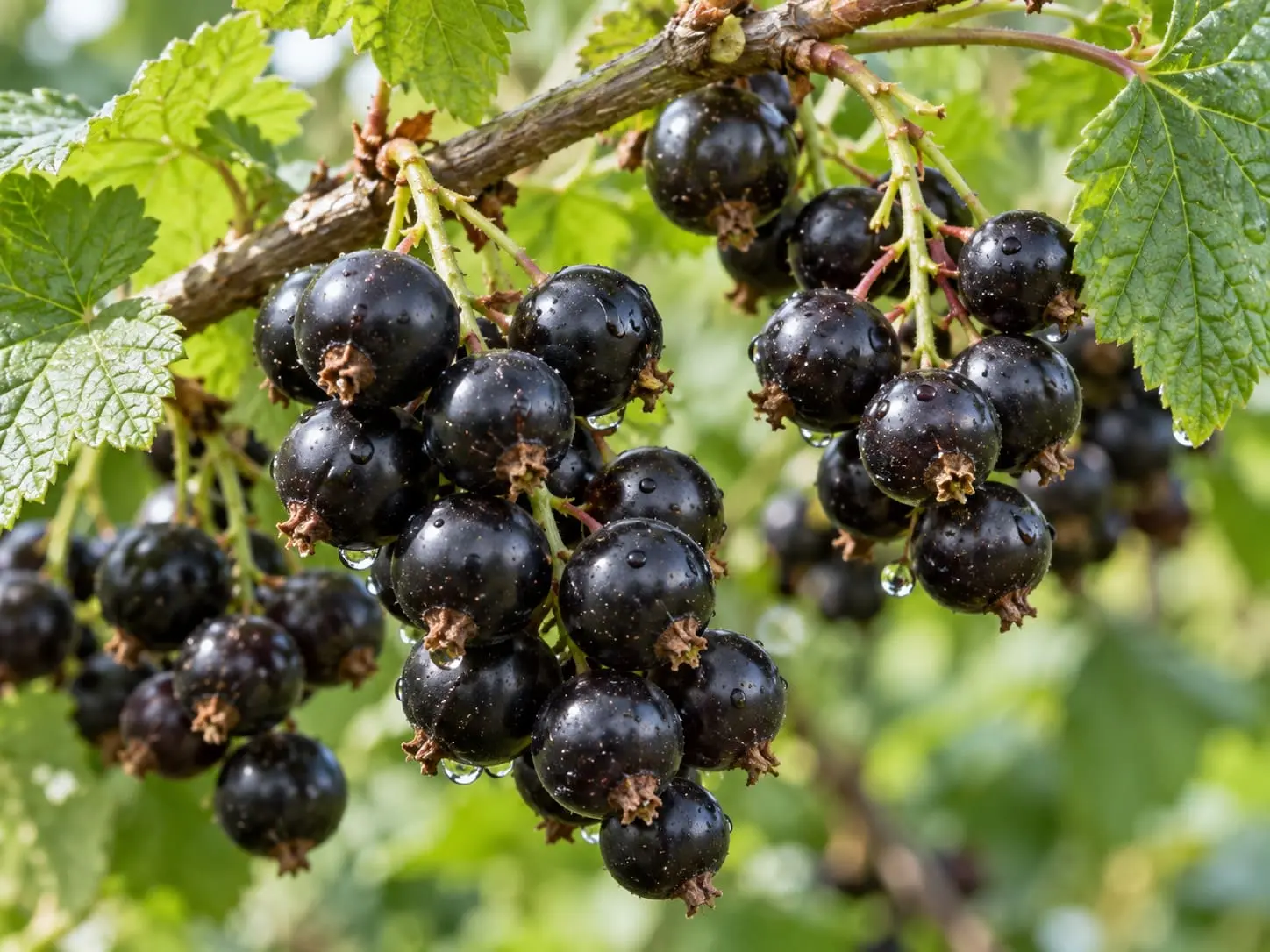
The Ukrainian word “smorodyna” (currant) comes from a Proto-Slavic root meaning “strong smell” — the same root as in “smorid,” “stench.” Etymologists explain that the plant was named for its sharp, distinctive aroma. German folk names for blackcurrant are “smelly” too — for example, Stinkbaum, “stinking tree” — and they were given because of the smell of the leaves.
The buds smell even stronger than the berries: they contain about 70 times more essential oil than the berries, according to one Estonian study. Anyone who has brushed against a blackcurrant bush in spring knows that smell. Perfumers value the buds too: their extract, the so-called bourgeon de cassis absolute, smells fruity, green, and a little “animalic.” And blackcurrant leaves are traditionally put into jars when pickling cucumbers and tomatoes.
The berry that was banned in America
In the US, blackcurrant was banned for decades. In the early 20th century, growing currants and gooseberries was prohibited there: they spread blister rust, a fungal disease of eastern white pine, a tree valuable to the timber industry. It is strictly a plant disease and has nothing to do with people.
The federal ban was lifted in 1966, and the decision was handed over to the states. New York didn’t allow currants until 2003, and in Maine, planting or even keeping blackcurrants is still prohibited. In Ukraine, by contrast, blackcurrant is a familiar garden berry: most of its bushes grow in private gardens.
Ingredients and nutritional value
In our apple-blackcurrant juice, there is one glass of blackcurrant juice for every nine glasses of apple juice; both juices are direct-pressed.
| Per 100 g of juice | Amount |
|---|---|
| Energy | 184.1 kJ / 44 kcal |
| Protein | 0.6 g |
| Fat | 0 g |
| Carbohydrates | 10.5 g |
A little blackcurrant, and the juice darkens: how we make it
The apples for the juice are our own, from our garden. We press the blackcurrants and the apples ourselves, each fruit separately, then blend the juices and pasteurize the blend before filling. There isn’t much blackcurrant juice in the blend, yet it darkens right away: blackcurrants contain so many anthocyanins — the pigments that make the berry almost black — that even a small share turns the whole juice dark red.
Blackcurrant juice and blackcurrant kompot
Kompot is cooked: the berries are covered with water and sugar and brought to a boil, and for winter it’s sealed in jars without straining. Blackcurrants are sour, so this kind of kompot usually gets quite a lot of sugar. In homemade kompot, blackcurrants are often paired with apples — the same pairing as in our juice.
The difference is where the flavor comes from. In kompot, the berries give it up to the water they’re cooked in, while juice is pressed from the fruit itself — in ours, the juices of apples and blackcurrants. Kompot turns out light and sweet, while juice is rich, with the natural tartness of blackcurrant. If you’d like a lighter drink, dilute the juice with water, as you would for mors.
Mors, tea, and a cake made with blackcurrant juice
1. Blackcurrant mors
Mix 250 ml of juice with 250 ml of cold water, and add a teaspoon of honey or sugar to taste, a slice of lemon, and ice. We explain how mors differs from juice and syrup in our article about raspberry juice.
2. Tea with blackcurrant juice
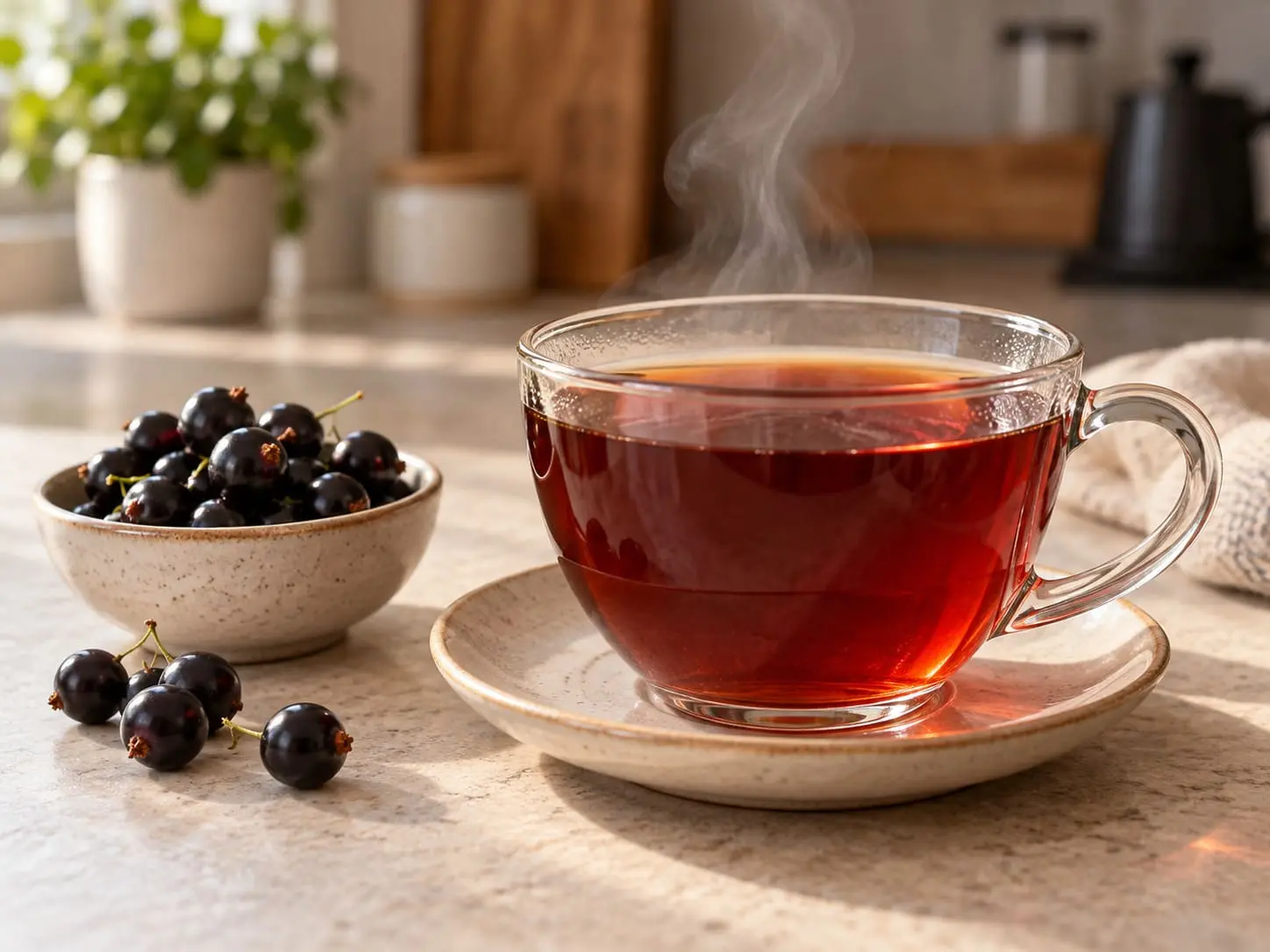
Brew a cup of strong black tea and add 2–3 tablespoons of juice — it’s like tea with blackcurrant jam, only less sweet.
3. Blackcurrant juice cake
Mix 250 ml of juice, 150 g of sugar, and 100 ml of vegetable oil, then add 300 g of flour and a packet (10 g) of baking powder. The batter will have the consistency of sour cream: pour it into a pan 20–22 cm in diameter and bake for 35–40 minutes at 180 °C. This cake needs no eggs or milk, and the blackcurrant gives it a berry flavor and a darker color.
Frequently asked questions about blackcurrant juice
Only black. Red currant, which Ukrainians also call “porichky,” is a different species, and there is none in our juice.
Blackcurrants are small berries with tough skins, so at home it’s easier to get juice from them with a steam juicer. The juice comes out dark and very sour — it tastes better mixed with milder juices. To jar it for winter, use the same method as for apple juice.
It’s juice from which most of the water has been evaporated: it’s sold to be diluted later and made into drinks. Our juice is direct-pressed; it isn’t concentrated. We’ve explained separately how direct-pressed juice differs from juice reconstituted from concentrate.
Both have some tartness, but they’re different: cherry is reminiscent of homemade kompot, while blackcurrant is darker, more astringent, and more fragrant.
Two or three spoonfuls of this juice in a cup of hot tea, and even in November your kitchen smells of summer blackcurrants.
Fresh-pressed apple-blackcurrant juice, 3 L. The minimum order is two boxes, and you can mix flavors; all our juices are in the “Juices” section. We ship within 1–2 business days via Nova Poshta and Ukrposhta across Ukraine. Our article “Fresh Apple Juice: How We Make It” explains how we make our juices, and “Juice in a Bag-in-Box with a Tap” covers how to open the box and how long it keeps.
Fresh-pressed apple-blackcurrant juice in our shop →
2026-10-05 13:16:16
Comments:0
Views:358
Comments