
0.00 грн.
CheckoutPear Juice: Taste, Ingredients, How to Make It at Home and How to Serve It
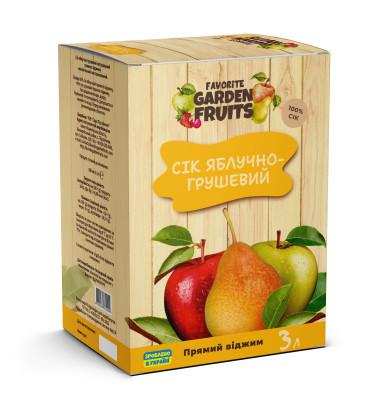
Our pear juice tastes like a fruit dessert in a glass: honeyed, with a delicate pear aroma that lingers into the aftertaste. Pear juice makes up 40% of it — no other juice of ours has such a large share of a second fruit, not even our plum juice. The rest is juice from the apples in our orchard; it freshens the pear’s sweetness. We add no purée: this is a not-from-concentrate (NFC) juice made from two fruits, and people drink it both with dessert and instead of it.
Contents
- Why a pear is “gritty” and what it smells like
- A pear finishes ripening after it’s picked
- Pears and apples: how we make the juice
- Ingredients and nutritional value
- How to make pear juice at home and preserve it for winter
- How to serve pear juice: 3 ideas
- Frequently asked questions
Why a pear is “gritty” and what it smells like
The small hard “bits of grit” in a pear’s flesh are stone cells: ordinary cells whose walls have turned woody because lignin has built up in them. Large clusters of these cells make a pear grainy, while small ones go almost unnoticed on the tongue. Hence the difference: one pear melts in your mouth, while another crunches with “grit.”
The aroma of a pear has its own signature, too — a compound that is actually called “pear ester.” It attracts the codling moth so strongly that orchard growers put it in traps as bait.
A pear finishes ripening after it’s picked
A European pear never becomes ripe on the tree. It is picked mature but still firm, and it ripens at room temperature — from the inside out, over 4–7 days depending on the variety. So don’t be disappointed if store-bought pears are hard: after a few days indoors they will ripen. Strawberries are the opposite: picked unripe, they won’t ripen any further (more on this in our article on strawberry juice).
Pears and apples: how we make the juice
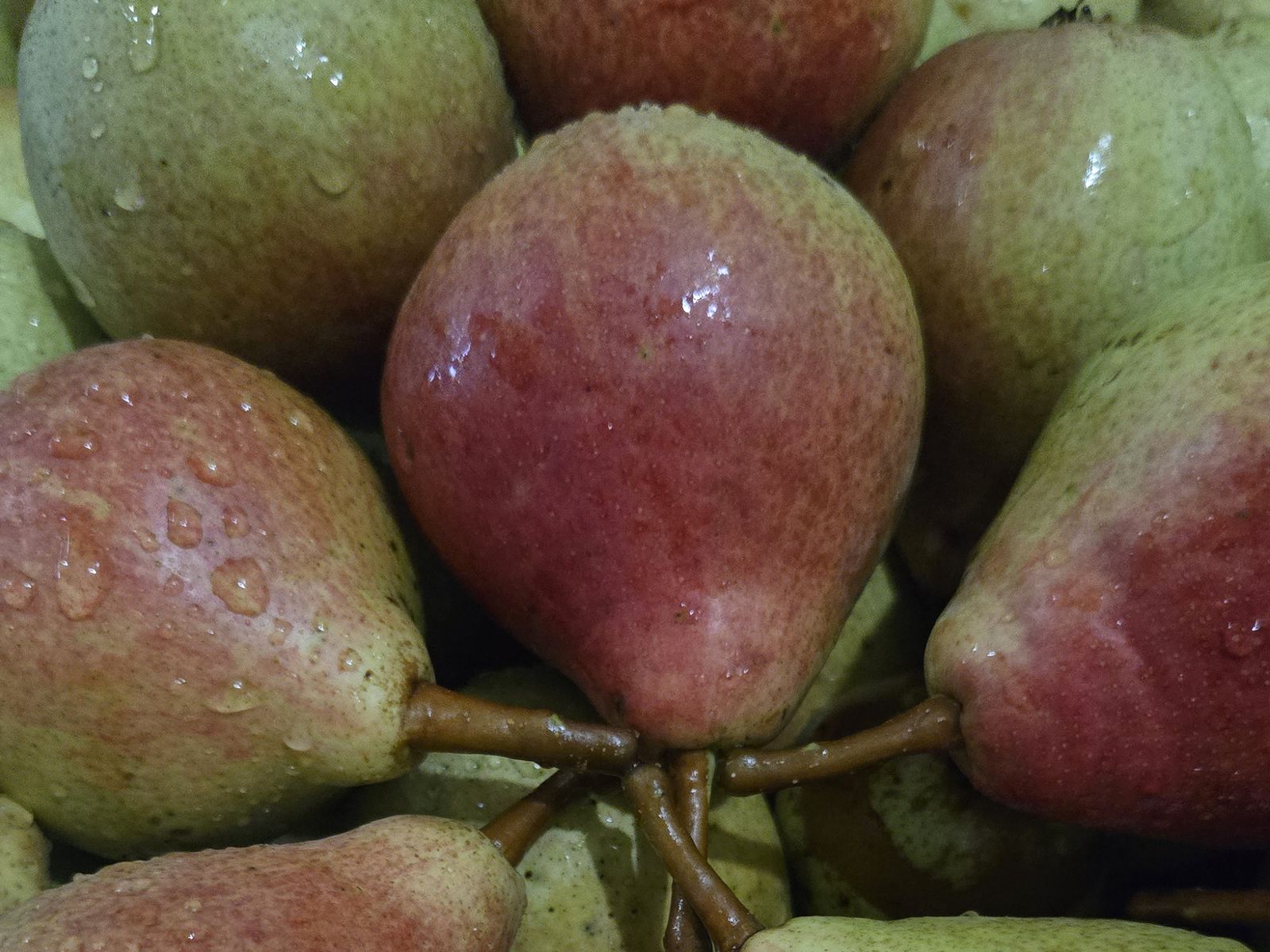
We wash the pears before they go into the press, press them ourselves, separately from the apples, and then blend the juices and pasteurize the finished blend before packaging.
Ingredients and nutritional value
Fresh-pressed apple-pear juice is 60% direct-pressed apple juice and 40% pear juice. How pear nectar falls short of juice is explained in our article on juices and nectars.
| Per 100 g of juice | Value |
|---|---|
| Energy | 184.1 kJ / 44 kcal |
| Protein | 0.6 g |
| Fat | 0 g |
| Carbohydrates | 10.5 g |
How to make pear juice at home and preserve it for winter
Pear juice from a juicer turns out best when the fruit is ripe but still firm: overripe pears give you something closer to purée. A steam juicer works too. Fresh pear juice darkens quickly in the air, so add a few drops of lemon juice right away. Don’t preserve it for winter without acid: pears are low in acid, so you need citric acid or lemon juice, following a tested recipe.
How to serve pear juice: 3 ideas
1. Pears poached in pear juice
Peel 2 firm pears, leaving the stems on, and stand them in a small saucepan. Pour in 500 ml of juice, add a vanilla pod or a cinnamon stick, and simmer covered over low heat for 20–25 minutes, until the pears are soft. Take them out and reduce the juice by half — this makes a sauce to pour over the pears before serving. They are delicious warm, with a spoonful of Greek yogurt.
2. With a cheese board
Lay out 100 g of soft white-rind cheese, 100 g of blue cheese, a handful of walnuts and 2 tablespoons of honey on a board, and pour everyone a glass of pear juice to go with them. Pear juice sets off the saltiness of the cheese just as a fresh pear does on a cheese board.
3. Dressing for an arugula salad
With a fork, whisk 3 tablespoons of juice with a spoonful of oil and a pinch of salt and pepper. Drizzle this dressing over two handfuls of arugula with slices of one pear and a handful of pumpkin seeds.
Mixed half and half with apple-cherry juice, pear juice tastes like a berry dessert — we described this pairing in our article on cherry juice. A hot spiced pear drink is among our recipes for non-alcoholic mulled wine.
Frequently asked questions about pear juice
“Hrushevyi.” After a hushing consonant such as sh or ch, the suffix -ov- is written only when the stress falls on the ending (hroshovýi, doshchovýi); otherwise it is -ev-: hrushévyi, just like ovochévyi. “Hrushevyi” is also the form given in dictionaries of the Ukrainian language.
Pears contain little acid, so their natural sweetness comes through more strongly than in most apples.
Press the apples and pears separately or together and blend to taste; for juice with pulp, cook the pears until soft and rub them through a sieve. Then heat the juice and seal it the same way as apple juice — but with added acid.
Press gently with your finger near the stem: if the “neck” gives a little, the pear is ready. It’s the neck you check, because a pear ripens from the inside out. A ripe pear also smells noticeably stronger than a firm one.
Putting together a cheese board for guests? Set pear juice beside it: pear and cheese are a time-honored pairing.
You can order fresh-pressed apple-pear juice, 3 L, on our website. The minimum order is two boxes, and you can mix flavors; all our juices are in the “Juices” section. We ship within 1–2 business days via Nova Poshta and Ukrposhta across Ukraine. How we make our juices is covered in “Fresh Apple Juice: How We Make It”; how to open the box and how long it keeps, in “Juice in a Bag-in-Box with a Tap”.
Order fresh-pressed apple-pear juice →
2026-10-05 12:00:00
Comments:0
Views:3066
Comments