

0.00 грн.
CheckoutPumpkin Juice: Taste, Ingredients, and How to Drink It
We make our pumpkin juice from two of our farm’s harvests — pumpkins and apples. The box holds not-from-concentrate (NFC) juice, 80% apple and 20% pumpkin. It isn’t thick and drinks like apple juice, while the pumpkin gives it a golden color and natural sweetness. It’s best served chilled — that way the taste is fresher and lighter.
Contents
- What pumpkin juice tastes like: apple first, then pumpkin
- Why pumpkin is paired with apple
- Pumpkin is a berry, and “giving a pumpkin” means no
- Ingredients and nutrition facts
- Cut by hand: how we make pumpkin juice
- Pumpkin juice canned for winter vs. direct-pressed juice
- How to drink pumpkin juice: with orange and more
- Frequently asked questions
What pumpkin juice tastes like: apple first, then pumpkin
The pumpkin in our juice is noticeable but doesn’t overpower the apple: you taste the apple first, and the pumpkin comes through in the aftertaste as a gentle sweetness. The juice is golden: pumpkin flesh is colored by the same pigments as carrots — carotenoids. Each variety has its own mix of them, which is why pumpkins range from yellow to bright orange.
Why pumpkin is paired with apple
On its own, pumpkin is mildly sweet and has almost no acidity, so its juice tastes rather flat. It needs a partner with some tartness: at home that’s usually orange or lemon, and in our juice it’s apple. The apple freshens the juice and makes it light without muting the pumpkin.
Orange makes the flavor brighter, while carrot makes it more “vegetable-like” — carrot has an article of its own, “Carrot Juice with Apple”.
Pumpkin is a berry, and “giving a pumpkin” means no
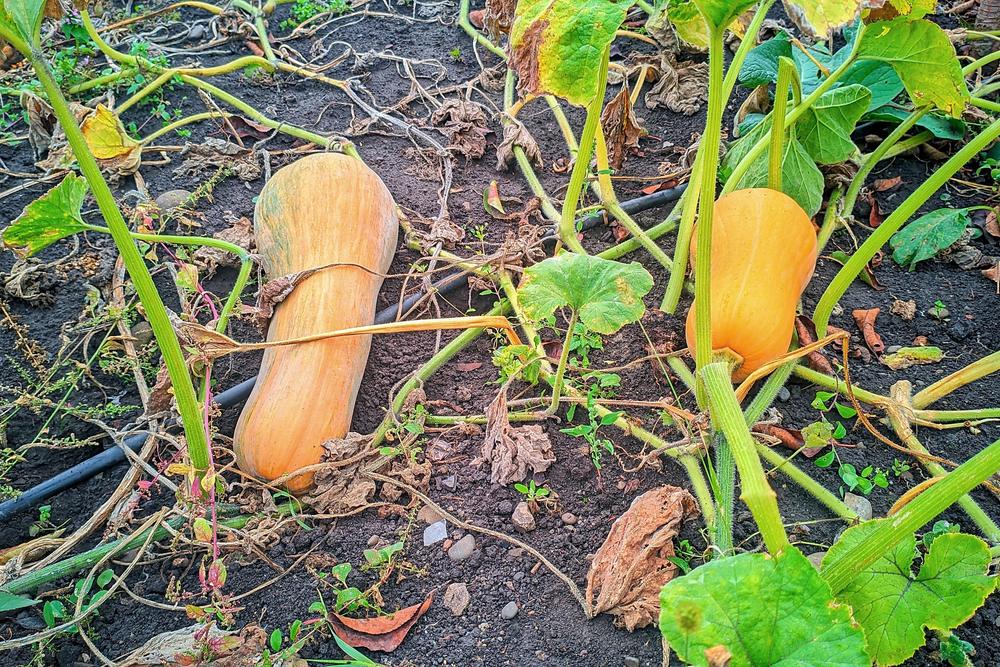
In the kitchen, pumpkin is a vegetable, but to botanists it’s a berry — though a special kind called a pepo, with a hard rind that doesn’t separate from the flesh. Cucumbers, watermelons, and melons are the same kind of “berries.”
Pumpkin’s homeland is the Americas. The oldest finds of domesticated pumpkin in Mexico are about 10 thousand years old — older even than the earliest known traces of corn, which date back about 8,700 years. Pumpkin reached Europe only after 1492, when Columbus crossed the Atlantic.
The Ukrainian word for pumpkin, “harbuz,” came to us through the Turkic languages (Crimean Tatar qarpuz, Turkish karpuz) from Persian, where “kharbuza” meant melon — literally “donkey cucumber.”
In Ukrainian tradition, the pumpkin also plays a starring role in matchmaking. By custom, a girl who didn’t want to marry a young man would hand the matchmakers a pumpkin. Hence the saying “daty (pidnesty) harbuza,” literally “to give (to present) a pumpkin,” which means to turn down a marriage proposal. And anyone who “got the pumpkin” or “left with a pumpkin” had been turned down. Luckily, our pumpkins end up not with matchmakers but in the press.
Ingredients and nutrition facts
Our apple-pumpkin juice has only two ingredients — direct-pressed apple and pumpkin juices. We don’t add sugar: the sweetness comes from the fruit itself.
| Per 100 g of juice | Amount |
|---|---|
| Energy value | 171.5 kJ / 41 kcal |
| Protein | 0.7 g |
| Fat | 0 g |
| Carbohydrates | 9.5 g |
Why is the juice called “apple-pumpkin” rather than “pumpkin-apple”? The juice that makes up the larger share comes first in the name — in ours, that’s apple.
Cut by hand: how we make pumpkin juice
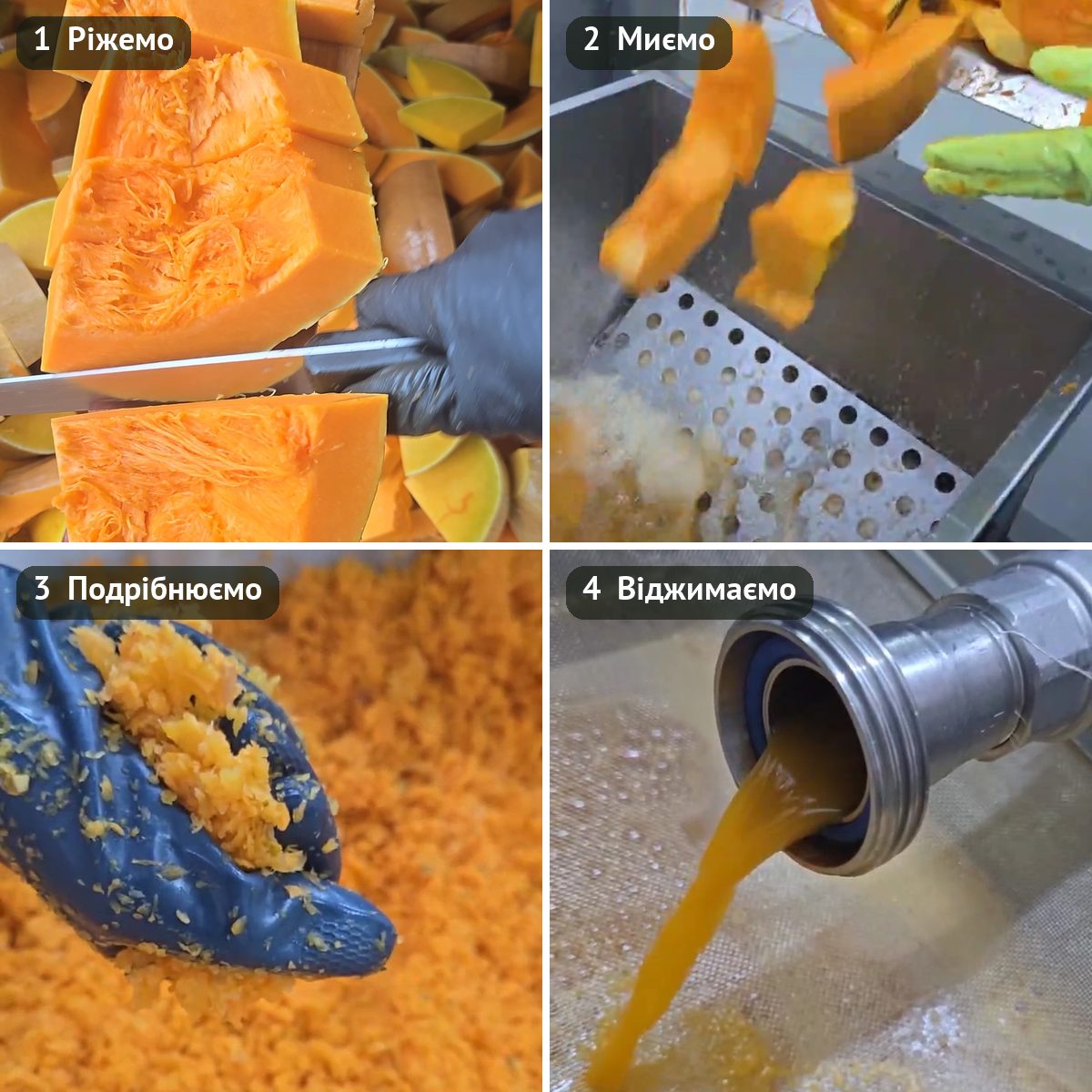
We harvest the pumpkins in our own field, cut them by hand, wash, crush, and press them; the apples from our orchard are pressed separately. We blend the juices once both are ready and pasteurize the blend before packing.
We pack the juice in Bag-in-Box — a 3 L cardboard box that hides a sealed bag with a tap. The bag shrinks as you pour the juice, and almost no air gets inside.
Pumpkin juice canned for winter vs. direct-pressed juice: what’s the difference
In popular recipes for “pumpkin juice for winter,” the pumpkin is cooked with water and sugar and then pureed, so in terms of composition the drink is closer to nectar: water and sugar are added, and the pumpkin is there as puree. Pumpkin is low in acid, so canning it for winter requires acid and a tested recipe.
And to avoid mixing up juice and nectar at the store, check out our guide to telling them apart by the label.
How to drink pumpkin juice: with orange and more
1. Pumpkin juice with orange
Mix 3 parts apple-pumpkin juice with 1 part freshly squeezed orange juice — for example, a glass of juice and the juice of one orange — and add ice. No cooking is needed; for a brighter aroma, grate a little orange zest on top.
2. Pumpkin smoothie with banana
Blend 200 ml of juice, half a banana, a pinch of nutmeg, and 3–4 ice cubes in a blender. In half a minute, you’ll have a silky fall smoothie.
3. Millet porridge made with pumpkin juice
Rinse 100 g of millet several times with hot water. Cover it with 200 ml of pumpkin juice and 200 ml of water, add a pinch of salt, and simmer covered over low heat for 20–25 minutes, stirring occasionally, until the millet absorbs the liquid. At the end, add a pat of butter and let the porridge rest for 5 minutes. Pumpkin and millet are old neighbors in Ukrainian cooking, and the juice makes the porridge golden and slightly sweet.
Frequently asked questions about pumpkin juice
No, it has no pulp and isn’t thick: its base is apple, so the juice is light. Juice with pulp is made with pumpkin puree, which makes it thick, while ours is made only from direct-pressed juices.
No. We don’t cook the pumpkin — we press it, just like the apples, and pasteurize the finished blend of juices. That’s why it tastes fresh and fruity.
First, taste a piece of the raw pumpkin: if it’s bitter, don’t use it for juice. Then peel the pumpkin, remove the seeds, cut it up, and run it through a juicer together with apples. This juice isn’t pasteurized, so it’s meant to be drunk right away.
An opened box keeps for 14 days, an unopened one for 12 months: in a dry place out of direct sunlight, at temperatures from 0 to 25 °C.
Pumpkin juice is a juice for fall breakfasts: serve a glass with cottage cheese pancakes, or use it to cook millet porridge.
You can order fresh-pressed apple-pumpkin juice, 3 L, on our website. The minimum order is two boxes, and you can mix flavors; all our juices are in the “Juices” section. We ship within 1–2 business days via Nova Poshta and Ukrposhta across Ukraine. We explain how we make our juices in the article “Fresh Apple Juice: How We Make It”, and how to open the box and how long it keeps in the article “Juice in a Bag-in-Box with a Tap”.
Order fresh-pressed apple-pumpkin juice →
2026-10-05 12:00:00
Comments:0
Views:2513
Comments